
Unpacking the silence around school violence
An estimated one billion children experience violence every year, and schools are where many of them meet it. So why does school safety still sit outside most education funders' portfolios?
In 2026, IEFG carried out in-depth research, gathering data and insight from funders to better understand why there is a silence around the issue of school violence. The findings were published as a report, and further investigated in a 6-episode podcast.
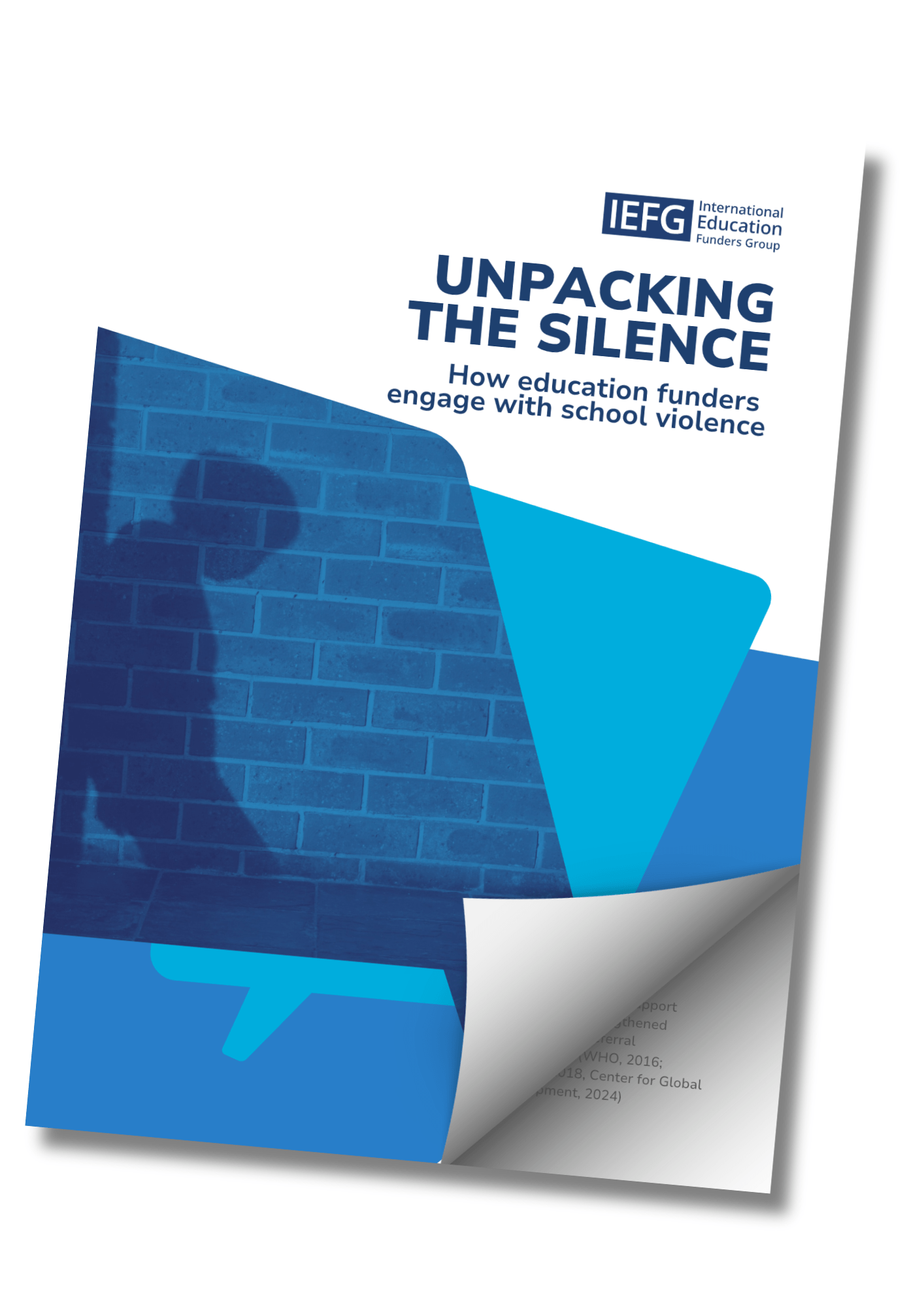
Listen to the podcast
Why school violence matters
Violence in and around schools has a detrimental effect on multiple aspects of children’s lives and future prospects.
- Learners with disabilities are disproportionately affected, impacting attendance, learning and wellbeing.
- Students who are (or are perceived to be) LGBT / gender non-conforming are more at risk.
- 1-in-5 low- and middle-income countries does not have international data on school violence against children.
- Violence is linked with poorer learning outcomes, lower attendance, reduced concentration, and higher risk of dropping out.
- Girls and boys who experience sexual violence have poorer reading and numeracy outcomes.
The evidence shows that school violence is preventable. But we need more research on how to stop sexual violence, strengthen responses, and build understanding of long-term impact.
1-in-3 students worldwide aged 13 - 15 report bullying or physical fights in or around school.
UNESCO (2019)
25% of girls have experienced sexual violence in the last 12 months in Sub-Saharan African countries with available data. Of those, 20% reported experiencing it in school.
What We Know (and Don't Know) about Violence Against Girls and Boys in School (2023)
12 practical adjustments to embed child safety in existing portfolios
Raise safety without triggering board concerns
- Link safety to established education frames.
- Use terms like “safe learning environments” publicly and precise language internally.
- Position safety as integral to education quality in internal strategies.
- Map where existing grants already address safety.
Adjust framing depending on audience
- Where system alignment is a priority, frame safety as a system quality concern compatible with ongoing reforms.
- When data is key, use simple indicators within existing monitoring.
- For child rights advocates, link safety to children’s right to learn.
- For the community-focused, emphasize community trust, partner protection, and voice.
Embed safety into existing tools and processes
- Add prompts on safety and climate to concept notes / grant templates to embed in early decision-making.
- Add safety indicators to existing logframes to signal importance while keeping reporting manageable.
- Use existing safety indicators / safeguarding processes to repurpose data and avoid structural expansion.
- Add a safety question to investment or risk reviews; staff can raise concerns without escalating.